
4 Warning Signs Your Vehicle Needs a Wheel Alignment
Your vehicle should feel predictable when you're behind the wheel. The steering wheel should stay centered, the vehicle should track straight, and your tires should wear relatively evenly.
If your vehicle starts pulling to one
side, the steering wheel sits crooked, or your tires begin wearing unevenly,
the problem could be your alignment.
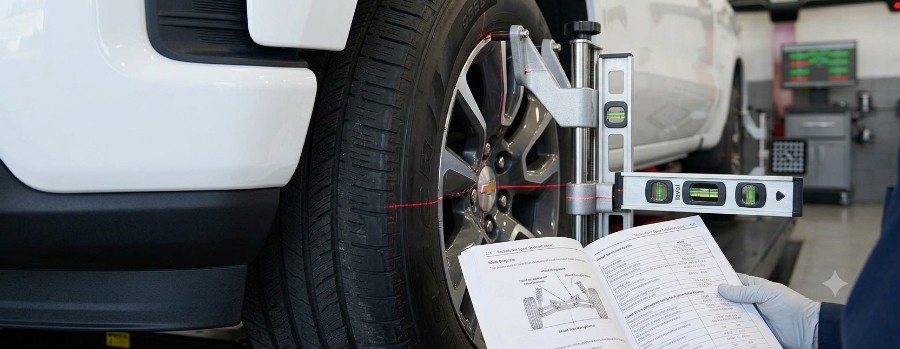
A proper tire alignment helps
ensure your vehicle's wheels are positioned according to the manufacturer's
specifications. Over time, potholes, curbs, road impacts, and normal driving
can affect those settings.
At Birdnow Motor Trade of Oelwein,
our service team can inspect your vehicle and help identify potential tire, wheel, steering, and
suspension concerns. Whether you drive a car, truck, or SUV, addressing
alignment issues can help you get more consistent
handling and tire wear.
What Is a Tire Alignment?
A tire alignment, also commonly called a wheel
alignment, involves adjusting the angles of your vehicle's wheels so they
are positioned correctly relative to one another and the road.
Despite the common term "tire
alignment," technicians are actually adjusting the vehicle's suspension
and steering geometry rather than the tires themselves.
The goal is to help your tires maintain
appropriate contact with the road while your vehicle tracks properly.
Alignment specifications can vary
depending on the vehicle. That's why a car alignment or truck alignment
should be performed according to the specifications for your particular
vehicle.
Whether you drive a passenger car, pickup
truck, crossover, or SUV, proper wheel alignment can be an important part of
maintaining your tires and overall driving performance.
Signs Your Vehicle May Need a Wheel Alignment
Alignment problems don't always appear
suddenly. Sometimes, your vehicle gives you subtle clues that its wheels aren't
positioned correctly.
1. Your Vehicle Pulls to
One Side
One of the most noticeable signs is when
your vehicle seems to drift or pull toward the left or right while you're
driving on a relatively straight road.
A slight tendency to follow the natural
slope of a road doesn't necessarily mean there's an alignment problem. However,
consistent pulling is a good reason to have your vehicle inspected.
If you find yourself constantly
correcting the steering to keep your vehicle moving straight, don't simply
assume it's something you'll have to live with. An inspection can help
determine whether alignment or another component is contributing to the problem.
2. Your Steering Wheel
Isn't Centered
When you're driving straight, your
steering wheel should generally remain close to its centered position.
If your vehicle travels straight while
the steering wheel is noticeably tilted to one side, it may be worth having the
alignment checked.
A crooked steering wheel doesn't
automatically mean your vehicle needs an alignment. However, when it's combined
with pulling, uneven tire wear, or changes in handling, it can be a useful
warning sign.
3. Your Tires Are
Wearing Unevenly
Your tires can tell you quite a bit about
how your vehicle is performing.
If one side of a tire is wearing
noticeably faster than the other, incorrect alignment may be contributing to
the problem. However, uneven tire wear can also result from incorrect tire
pressure, worn suspension components, tire imbalance, or other issues.
That's why it's important to have unusual
tire wear properly inspected instead of assuming alignment is automatically the
cause.
Regularly checking your tires can also
help you catch potential problems before they become more expensive.
4. Your Vehicle Feels
Unstable
Does your vehicle feel like it wanders
instead of tracking naturally down the road? Does the steering feel different
from what you're accustomed to?
These symptoms don't automatically mean
you need an alignment. Tire condition, wheel balance, suspension components,
and other issues can produce similar symptoms.
Still, unusual handling is a good reason
to have your vehicle's tires, wheels, steering, and suspension inspected.
What Can Cause Alignment Problems?
Your vehicle's alignment can change for
several reasons.
One of the most common is an impact.
Hitting a pothole, curb, or piece of road debris can potentially affect wheel
alignment or suspension components.
Road conditions can make this
particularly relevant for drivers who regularly encounter rough pavement,
potholes, or uneven roads.
Normal wear can also play a role.
Steering and suspension components can wear over time, potentially affecting
how your vehicle handles and how evenly your tires wear.
An alignment check can therefore be
worthwhile after a significant impact or when you notice changes in steering,
handling, or tire wear.
It's also important to remember that an
alignment won't correct every handling or tire problem. If a suspension
component is damaged or worn, that issue may need to be addressed before the
alignment can be properly completed.
How Often Should You Get a Tire Alignment?
There isn't one universal mileage
interval that applies to every vehicle.
Instead, consider having your alignment
checked when you notice symptoms such as pulling, a crooked steering wheel,
unusual tire wear, vibrations, or changes in handling.
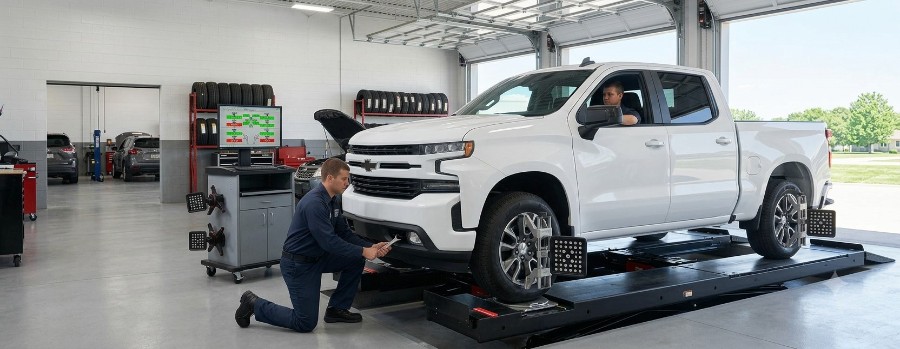
It's also a good idea to have the
alignment inspected after hitting a significant pothole or curb.
Regular tire inspections can help
identify potential problems before they become more noticeable. Keeping your
tires properly inflated and following the maintenance recommendations in your
owner's manual can also help support even tire wear.
If you aren't sure whether your vehicle
needs an alignment, a professional inspection can help determine whether
alignment adjustments or another type of service is appropriate.
How Much Does a Tire Alignment Cost?
The answer can vary depending on your
vehicle, the type of alignment required, the condition of the steering and
suspension components, and the service provider.
Some vehicles may require a relatively
straightforward alignment, while others may require additional inspection or
repairs before the alignment can be completed.
That's why it's better to have your
vehicle inspected and receive an estimate based on your specific vehicle rather
than relying on a generic alignment price.
If you're comparing tire alignmentprices, also consider what is included in the service. A lower advertised price
isn't necessarily comparable if another service includes additional inspections
or adjustments.
For current pricing and availability,
contact Birdnow Motor Trade of Oelwein's service team.
Why Choose Birdnow Motor Trade of Oelwein for Vehicle
Service?
When your vehicle needs maintenance or
repair, having a service team that understands a wide range of vehicles can
make the process easier.
Birdnow Motor Trade of Oelwein serves drivers looking for vehicle maintenance and repair in
Oelwein and the surrounding communities. Whether you're dealing with uneven
tire wear, steering concerns, or changes in how your vehicle handles, a
professional inspection can help identify what needs attention.
Tire and wheel-related concerns shouldn't
always be treated as isolated problems. Alignment, tire condition, wheel
balance, steering components, and suspension can all affect how your vehicle
feels on the road.
Having these components inspected can
help determine the right service for your vehicle rather than replacing or
adjusting parts unnecessarily.
Keep Your Vehicle Tracking Straight
A wheel alignment may not be the first
thing you think about when maintaining your vehicle, but it can make a
difference when it comes to steering behavior, handling, and tire wear.
If your vehicle is pulling to one side,
your steering wheel isn't centered, or your tires are showing unusual wear,
don't ignore the signs. An inspection can help determine whether alignment is
the cause or whether another steering, suspension, tire, or wheel issue needs
attention.
For wheel alignment service, tire maintenance, and other vehicle service needs in Oelwein, contact Birdnow Motor Trade of Oelwein to schedule an appointment.