
Why Is My Vehicle Losing Power? Common Causes of Poor Acceleration
Your vehicle should respond when you press the accelerator. If it suddenly feels sluggish, hesitates, or struggles to pick up speed, something may be keeping it from performing the way it should.
Maybe your truck feels unusually slow
when merging onto the highway. Maybe your SUV struggles to accelerate while
climbing a hill. Or perhaps the engine revs normally, but the vehicle itself
doesn't seem to gain speed.

At Birdnow Motor Trade of Oelwein, our
service team works with drivers dealing with all kinds of maintenance and
repair concerns. The dealership's service
department handles everything from routine maintenance to engine diagnostics
and transmission service, with trained technicians who work with Ford and
Chevrolet vehicles.
A noticeable loss of power can have
several possible causes. Some may be relatively simple maintenance issues,
while others can involve the fuel system, ignition, transmission, exhaust, or
engine electronics.
Understanding some of the most common
causes can help you recognize when your vehicle needs professional attention.
What Does It Mean When a Vehicle Loses Power?
When a vehicle is losing power, you may
notice that it takes longer to accelerate, struggles
on hills, or feel less responsive when you press the accelerator. You might
also experience hesitation, rough running, or reduced performance at higher
speeds.
For drivers around Oelwein, these
problems can become particularly noticeable when merging into traffic, carrying
passengers or cargo, or driving outside the city.
The symptoms can provide useful clues
about what may be happening.
|
What You're Experiencing
|
Possible Causes
|
|
Sluggish acceleration
|
Air, fuel, ignition, or throttle issues
|
|
Engine hesitation
|
Sensor, fuel, or ignition problems
|
|
Engine revs but vehicle doesn't accelerate normally
|
Transmission concerns
|
|
Loss of power at higher speeds
|
Fuel delivery or exhaust restriction
|
|
Rough running with power loss
|
Misfire or ignition problem
|
|
Power loss with a check engine light
|
Engine or emissions-related fault
|
1. Your Engine May Not Be Getting Enough Air
Your engine needs the right mixture of
air and fuel to produce power. If airflow is restricted, acceleration and
overall engine performance can suffer.
A dirty or clogged air filter is one
possible cause. Over time, the filter can collect dirt and debris, making it
more difficult for the engine to receive the airflow it needs.
You may notice sluggish acceleration when
climbing a hill or merging into traffic, along with reduced throttle response.
Whether you're driving a Ford F-150,
Chevrolet Silverado, or another vehicle, checking the air intake system can be
an important part of diagnosing a performance concern.
2. A Fuel System Problem Could Be Holding Your Vehicle Back
Your engine also needs a consistent
supply of fuel to produce power. Problems involving the fuel pump, fuel
injectors, fuel pressure, or other components can cause hesitation and poor
acceleration.
A vehicle with a fuel-related problem may
seem relatively normal while cruising but struggle when you ask for more power.
You might notice hesitation when
accelerating or greater difficulty maintaining performance while driving uphill
or carrying a heavier load.
Because several different components can
contribute to fuel delivery problems, proper diagnostics can help determine
where the issue is actually coming from.
3. Worn Spark Plugs Can Affect Acceleration
Think of your engine as a carefully timed
series of small explosions. Spark plugs help ignite the air-fuel mixture inside
the engine, so worn or fouled plugs can affect how efficiently that process
happens.
When the ignition system isn't working
properly, your vehicle may develop a misfire or simply feel less responsive.
You may also notice rough idling, shaking
while stopped, reduced fuel economy, or a check engine light.
Regular maintenance can help identify
worn spark plugs and other ignition components before they begin affecting
engine performance.
4. An Engine Sensor Could Be Sending the Wrong Information
Modern vehicles rely on numerous sensors
to monitor engine operation and help the vehicle's computer make adjustments.
Sensors that monitor airflow, throttle position, oxygen levels, and other
engine conditions can all influence performance.
If a sensor provides inaccurate
information, the engine may not receive the information it needs to operate
efficiently.
Possible symptoms include hesitation when
pressing the accelerator, rough running, reduced performance, or an illuminated
check engine light.
A diagnostic trouble code can provide an
important clue, but it doesn't always mean the component associated with that
code has failed. Proper diagnostic testing is important before replacing parts
unnecessarily.
5. Your Exhaust System Could Be Restricting Performance
Your engine needs to breathe in—and
breathe out.
Exhaust gases need to leave the engine
efficiently. If part of the exhaust system becomes restricted, engine
performance can suffer, particularly as engine speed increases.
A restricted catalytic converter, for
example, can make a vehicle increasingly difficult to accelerate.
You may notice sluggish acceleration that
becomes more obvious at higher speeds or greater power loss when driving uphill
or under load.
If your vehicle's performance continues
to decline, an inspection can help determine whether an exhaust restriction is
contributing to the problem.
6. The Transmission May Be the Real Culprit
Not every acceleration problem starts
with the engine.
Your engine can produce power normally,
but the transmission has to transfer that power to the wheels. If there is a
transmission problem, you may notice the engine revving without a corresponding
increase in vehicle speed.
For example, if your Ford Explorer or
Chevrolet Equinox suddenly revs higher when you accelerate but doesn't seem to
gain speed normally, the transmission may need to be inspected.
Delayed or harsh shifting, slipping, or
inconsistent gear changes can also point toward a transmission-related problem.
7. Throttle Problems Can Cause Hesitation
The throttle system controls how much air
enters the engine when you press the accelerator. Problems with the throttle
body or electronic throttle system can affect how quickly your vehicle
responds.
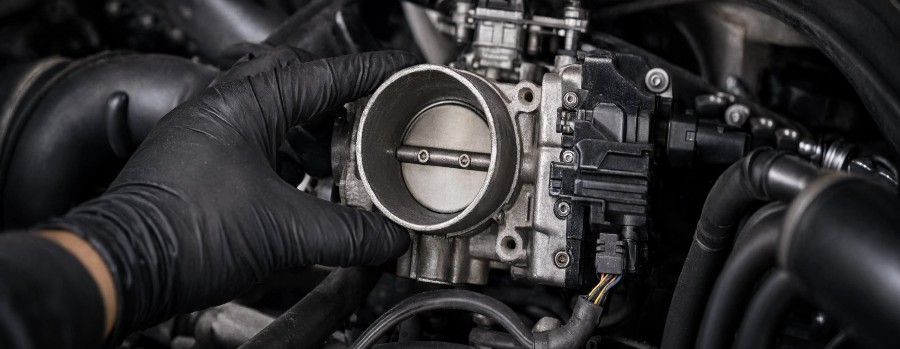
A noticeable delay between pressing the
accelerator and the vehicle responding can be a sign that something needs
attention.
Some vehicles may also display a warning
message or enter a reduced-power mode when the computer detects a problem with
the electronic throttle system.
Why Is My Vehicle Losing Power With the Check Engine Light
On?
A loss of power combined with a check
engine light deserves attention.
The check engine light can be triggered
by many different problems, ranging from an engine misfire to an emissions
issue or sensor fault. The diagnostic trouble code can help narrow down the
possibilities, but the code itself isn't always the complete diagnosis.
For example, a code related to an engine
sensor doesn't automatically mean the sensor needs to be replaced. A wiring
issue, vacuum leak, or another underlying problem could potentially be
responsible.
That is why professional engine
diagnostics can be an important first step when your vehicle's performance
changes unexpectedly.
When Should You Bring Your Vehicle infor Diagnosis?
A temporary change in performance may not
always indicate a major repair, but persistent or worsening power loss
shouldn't be ignored.
If your vehicle is consistently
struggling to accelerate, shaking, stalling, displaying warning lights, or
experiencing a significant drop in performance, having it inspected can help
prevent a small problem from developing into a more expensive repair.
A flashing check engine light or severe
engine shaking warrants prompt attention.
For drivers in Oelwein and the
surrounding communities, getting the problem diagnosed early can also help keep
an unexpected breakdown from disrupting your daily routine.
Getting to the Bottom of Your Vehicle's Performance Problems
The right repair starts with the right
diagnosis.
Loss of power can come from something as
simple as restricted airflow or worn spark plugs, but it can also involve the
fuel system, sensors, exhaust, transmission, or other major components.
At Birdnow Motor Trade of Oelwein, the
service department provides engine diagnostics, transmission services, general
automotive repair, preventative maintenance, and other vehicle services. The
team is equipped to work with Ford and Chevrolet vehicles as well as address a
broad range of automotive service needs.
If your vehicle doesn't feel as responsive as it used to, don't simply adjust to the problem. Whether you're driving a Ford, Chevrolet, or another make, getting the cause identified can help you determine the right next step and get your vehicle back to performing the way it should.